The growing field helping Vermonters navigate prevention, recovery, treatment, harm reduction, and support
Substance use touches nearly every corner of healthcare and community life in Vermont – from emergency departments and recovery centers to schools, public health offices, peer support programs, outreach organizations, and primary care clinics.
Which means the workforce responding to it is equally broad.
Vermont’s substance use workforce includes prevention specialists helping students build resilience before substance use ever begins. It includes recovery coaches supporting people through some of the hardest moments of their lives. It includes nurses, social workers, educators, peer support specialists, harm reduction teams, counselors, community health workers, emergency responders, program coordinators, and public health professionals working across every stage of prevention, intervention, treatment, and recovery.
Some people enter the field through healthcare degrees. Others arrive through lived or living experience, community advocacy, recovery work, or adjacent professions. Increasingly, Vermont is recognizing that all of those pathways matter.
And right now, the state needs more people in this workforce.
According to the Vermont Department of Health’s Division of Substance Use Programs (DSU), workforce shortages continue to impact prevention, harm reduction, treatment, and recovery services statewide. The DSU’s 2025–2028 Strategic Plan identifies workforce recruitment, retention, training, and professional development as critical priorities moving forward.
In response, DSU recently expanded its online Workforce Development Resource Hub to help Vermonters better understand the wide range of career opportunities, certifications, trainings, and professional pathways available within the field.
The result is something that feels intentionally bigger than a typical careers webpage. Rather than posting jobs in the substance use field, the hub offers information about how the Vermont substance use system of care works and where someone might fit into it.
A Workforce That Extends Far Beyond Treatment
One of the biggest misconceptions about the substance use workforce is that it only exists inside treatment settings.
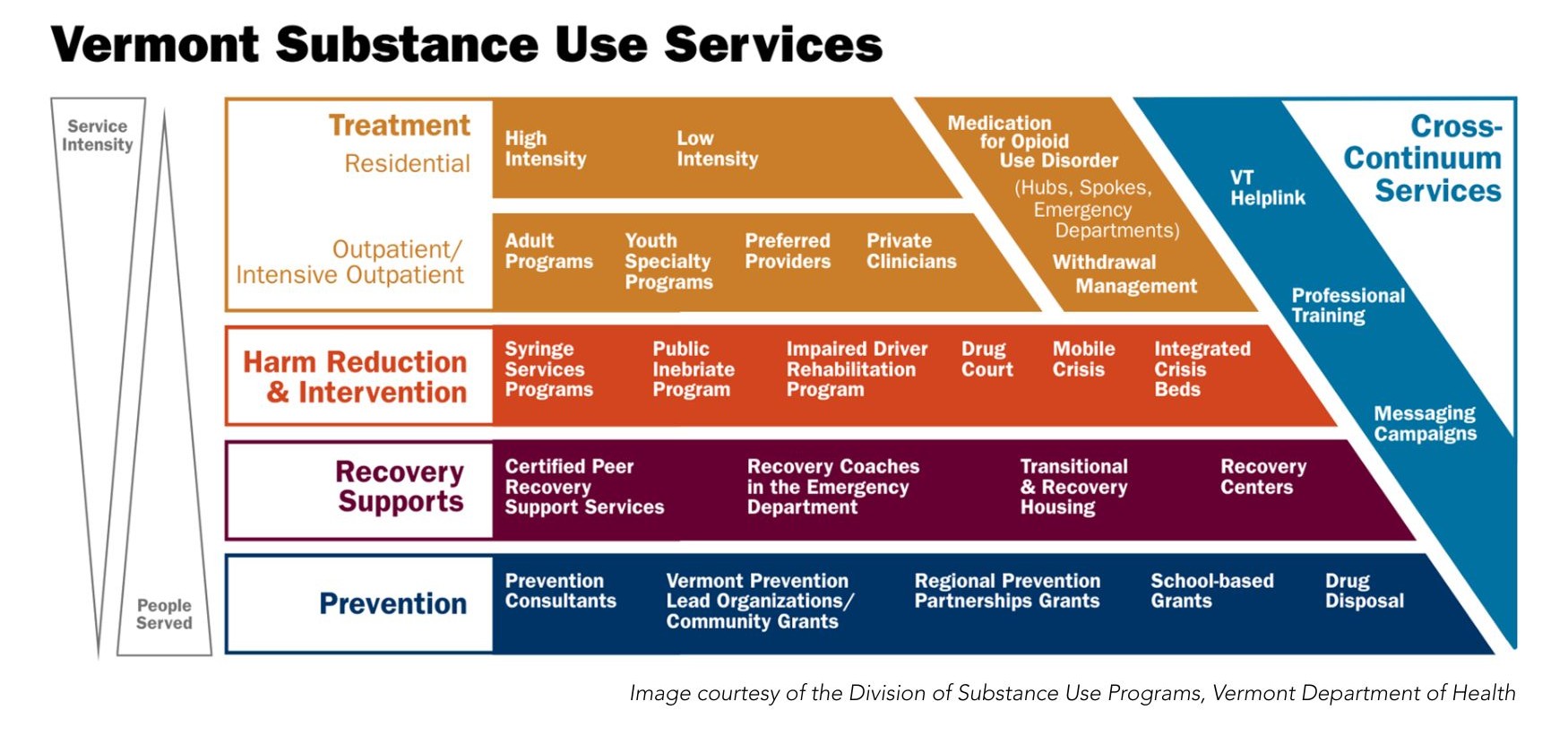
In reality, Vermont’s system of care spans prevention, intervention, harm reduction, treatment, and recovery supports. That means the workforce itself stretches across schools, hospitals, nonprofits, public health initiatives, recovery centers, housing programs, community outreach teams, and local organizations statewide.
Some professionals work directly with individuals navigating substance use disorder. Others focus on education, prevention, systems coordination, public policy, workforce development, or helping communities respond to emerging public health challenges.
And because substance use intersects with mental health, housing, trauma, chronic illness, family systems, and healthcare access, many professionals working in the field wear multiple hats at once.
That complexity is part of why Vermont is investing more heavily in workforce development now.
“Something we heard loud and clear in the needs assessment process… was that workforce was an area that needed attention and some more TLC,” said Roy Belcher, Director of Planning and Community Services for the Division of Substance Use Programs. “One of those areas is definitely recruitment and retention and just – do we have enough people in the field to do the work that we need to do?”
There Isn’t One “Correct” Way Into the Field
For students and early-career professionals exploring healthcare pathways, one of the most valuable aspects of the resource hub is how intentionally it moves away from the idea of a single, linear career path.
“Often sometimes [young adults] can get stuck in a very linear phase when thinking about career fields,” said Elizabeth Morris, Manager of Planning and Community Services for DSU. “And I think that can be a challenge… when it comes to the substance use field, you don’t necessarily have to be a clinician.”
That flexibility reflects the reality of the workforce itself.
Some professionals come into the field through nursing, counseling, or social work programs. Others begin as peer recovery support specialists, recovery coaches, prevention professionals, or community advocates. Many are drawn to the work because of lived or living experience – either personally or through family, friends, or community experiences.
“There’s ways with lived experience to engage,” Morris said. “And that experience in itself can be really beneficial to fields like social work, but also fields like nursing… and prevention.”
DSU leaders repeatedly emphasize that lived experience is not viewed as secondary to the work – it is often foundational to it.
“We see a lot of people in substance use services who have lived or living experience, which is something that we really value,” Belcher explained.
That perspective has helped shape the new online career resources, which break down workplace settings, education options, certifications, and opportunities across the continuum of care.
A Field Becoming More Specialized – and More Recognized
Another major shift happening across Vermont’s substance use workforce is the growing emphasis on professionalization, credentialing, and standardized training.
Historically, many substance use services evolved through grassroots community efforts and organizations led by deeply passionate people – often people with lived experience themselves. That work remains essential. But the field is also becoming increasingly specialized and formally recognized within healthcare systems.
“We’re at a turning point now,” Belcher said. “A lot of these jobs that have been around for a long time, we’re now moving them into a more professional sort of realm that have credentialing and certifications associated with them.”
That includes newer certifications for peer recovery support specialists, recovery service organizations, prevention professionals, and recovery coaches – efforts designed to strengthen consistency, improve quality of care, and create clearer long-term career pathways.
It also means people entering the field today have more opportunities for advancement, continuing education, and specialization than ever before.
The Work Is Human – and Demanding
The reality of working in substance use services is that it can be emotionally intense.
Professionals in the field regularly support people experiencing trauma, overdose, housing instability, mental health challenges, grief, stigma, and recovery setbacks. Burnout and workforce sustainability were among the top concerns identified in DSU’s workforce needs survey.
At the same time, the people working in the field often describe it as deeply meaningful work.
“It’s definitely a field that is… rooted in passion,” Belcher said. “The importance of the work and the difference that people can make in people’s lives is really why people stay in it.”
That balance – emotionally difficult work paired with profound human impact – is something many healthcare and human service professionals understand well.
And increasingly, Vermont is trying to ensure the workforce supporting that work has stronger infrastructure behind it.
Building a More Accessible Workforce Across Vermont
In a rural state like Vermont, accessibility matters.
Geography affects everything from training participation and continuing education access to professional networking and career advancement opportunities. DSU’s online workforce development resources were designed with that reality in mind.
“We’ve realized that virtual trainings are the way to go,” Belcher said. “Recognizing and embracing the accessibility and effectiveness of virtual trainings is key.”
The Workforce Development Hub now includes:
- Substance Use Careers – career exploration tools highlighting pathways across Vermont’s substance use workforce, including credentialing information, education pathways, workplace settings, and roles across prevention, treatment, recovery, and harm reduction services
- Self-Paced Learning – on-demand professional development opportunities including recorded trainings, webinars, and flexible learning modules for current and aspiring substance use professionals
- Training Opportunities Calendar – a statewide calendar of trainings, workshops, and workforce development opportunities related to substance use prevention, treatment, and recovery services
The platform is designed to make workforce development resources easier to navigate by bringing trusted training opportunities, career information, and professional learning tools together in one centralized, accessible place.
“We’re trying to do the legwork of identifying quality, trusted resources and make them available,” Belcher said.
Why This Workforce Matters
At its core, substance use workforce development is really about community health.
It’s about whether people can access prevention services before a crisis happens. Whether recovery support exists after treatment. Whether schools have trained prevention staff. Whether hospitals have professionals equipped to respond compassionately to substance use disorder. Whether people in rural communities can find support close to home.
And ultimately, whether Vermont has enough trained, supported professionals to meet the evolving needs of communities statewide.
For students, career changers, healthcare professionals, and people with lived experience alike, Vermont’s substance use workforce offers an opportunity to step into work that is complex, evolving, deeply human, and increasingly essential.